

Heart Failure occurs when the heart cannot pump enough blood to meet the body’s needs. This leads to symptoms such as shortness of breath, fatigue, swelling of the legs, and reduced ability to perform daily activities.
For patients with moderate to severe heart failure, especially those whose heart chambers do not beat in sync, an advanced treatment called Cardiac Resynchronization Therapy (CRT) can greatly improve heart function and quality of life.
:- CRT can be performed using two main types of devices:
CRT-P (Cardiac Resynchronization Therapy Pacemaker)
CRT-D (Cardiac Resynchronization Therapy with Defibrillator)
🩺 Conclusion
Cardiac Resynchronization Therapy (CRT / CRT-D) is a revolutionary treatment for patients with heart failure and abnormal heart rhythms. It helps the heart beat more efficiently, prevents sudden cardiac arrest, and significantly improves both survival and quality of life.With modern technology, CRT and CRT-D devices are smart, reliable, and life-saving, offering renewed hope to heart failure patients worldwide
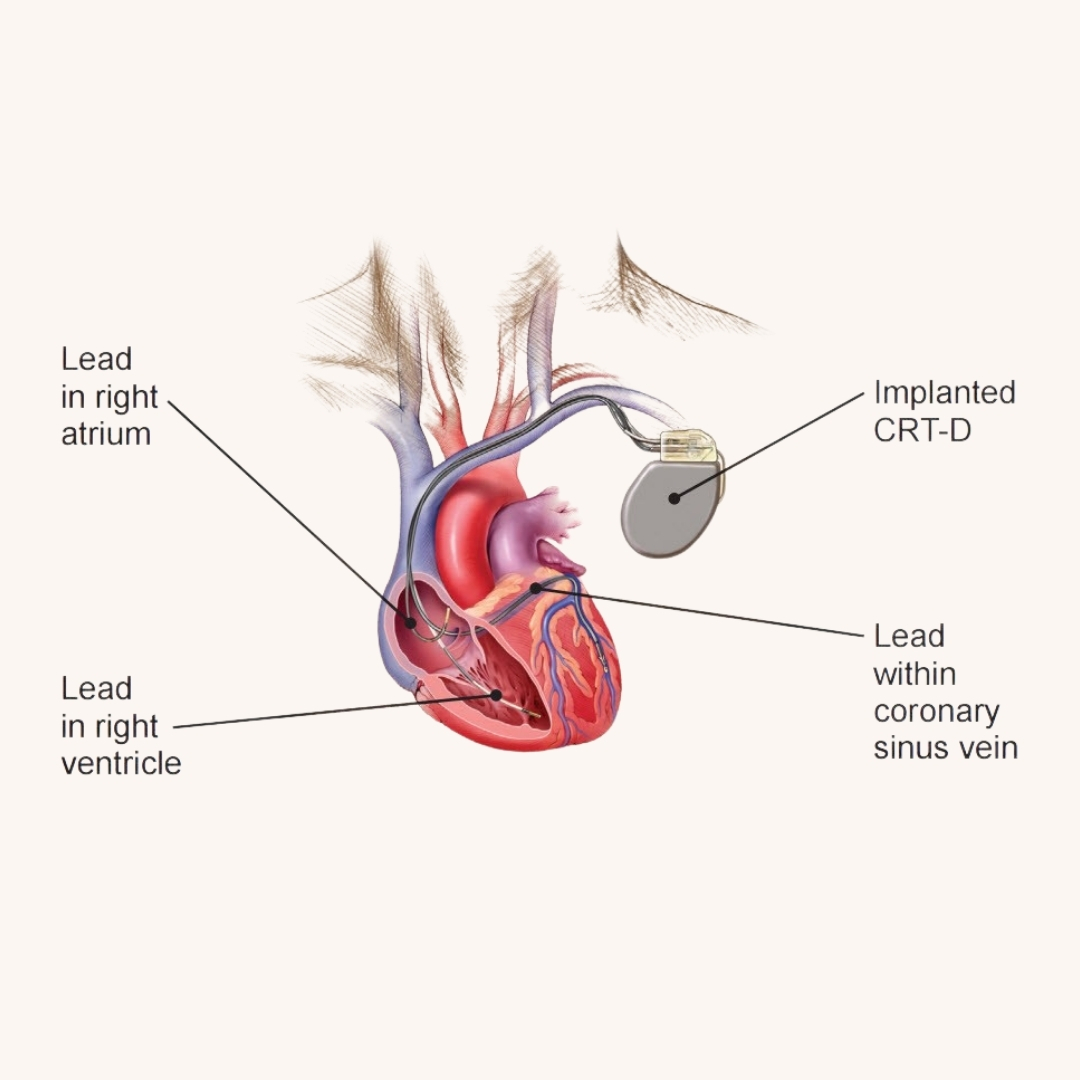
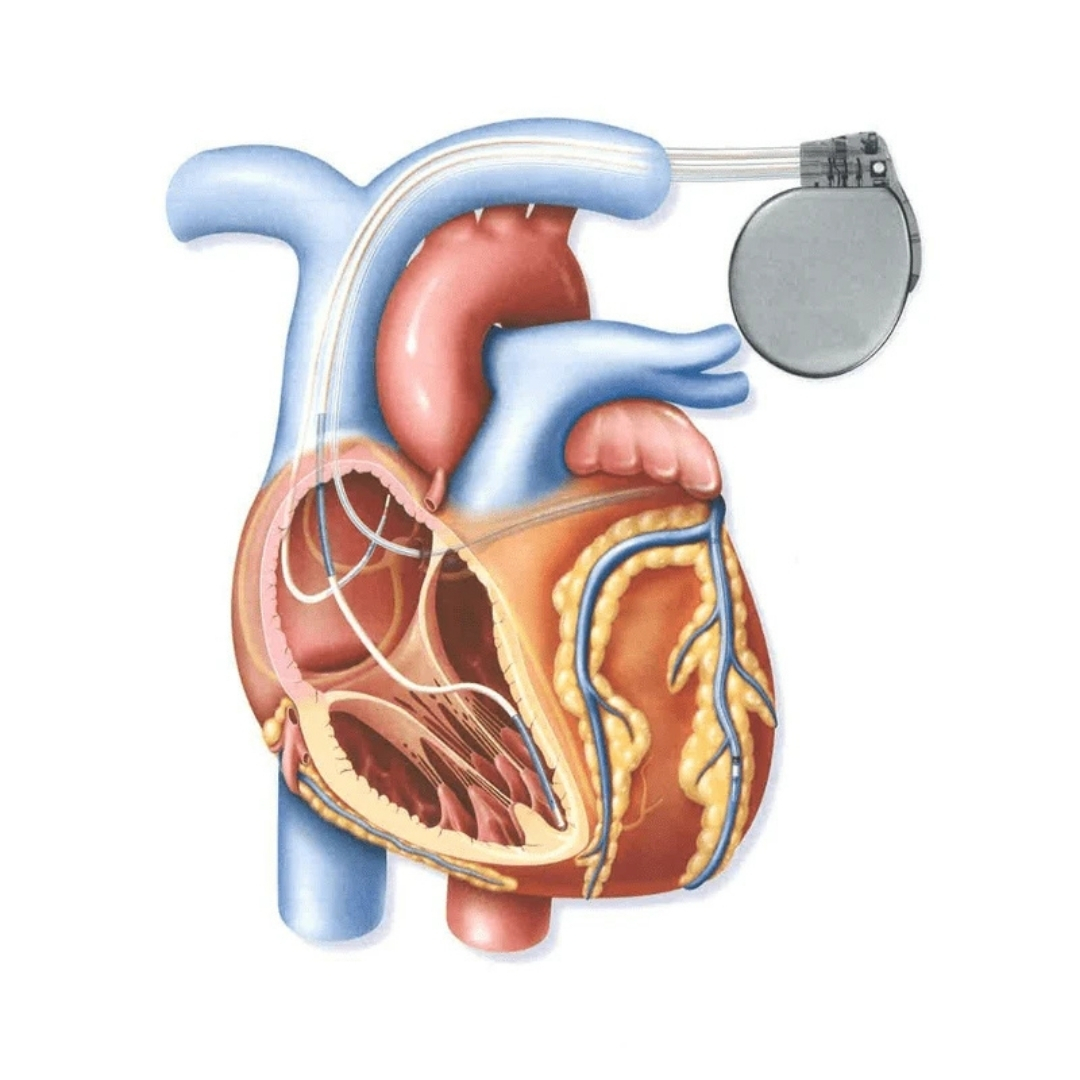
In some heart failure patients, the right and left ventricles (lower heart chambers) do not contract together, making the heart less efficient.
CRT uses a special pacemaker that sends tiny electrical impulses to both ventricles, helping them beat in a coordinated, synchronized manner.
This improves the heart’s pumping ability, reduces symptoms, and enhances overall heart performance.
CRT-D is similar to CRT but includes an additional Implantable Cardioverter Defibrillator (ICD) function.
This device not only helps the heart beat in sync but also detects and corrects dangerous arrhythmias (irregular heartbeats) by delivering a controlled electric shock if necessary — preventing sudden cardiac arrest.
Raghuraj Hospital is a leading multi-speciality and cardiac care hospital located in Mansarovar, Jaipur. Known for its advanced facilities and compassionate healthcare, the hospital is dedicated to providing high-quality medical services under one roof.
C-26, Vande-Mataram Road, Opp. Iskcon Temple Road, Near Hotel Hyatt Regency, Krishna Sagar Colony, Mansarovar, Jaipur, Rajasthan 302020
© Raghuraj Hospital. All Rights Reserved.
Designed by CH DIGITAL SOLUTION COMPANY